
Surprising Origins of Machismo: Costa Rica’s #manosphere
Spending time with the Watch Tower crew is not usually my cup of tea. But traveling tends to make me more open-minded.
While preparing our next men’s retreat in Costa Rica, I was exploring a local community market. As I passed a stand with the usual leaflets calling people to action, two of them immediately caught my attention — both dedicated specifically to men.
Running on autopilot, I rushed past as I normally would. But then I stopped, turned around, walked back, and started a conversation.
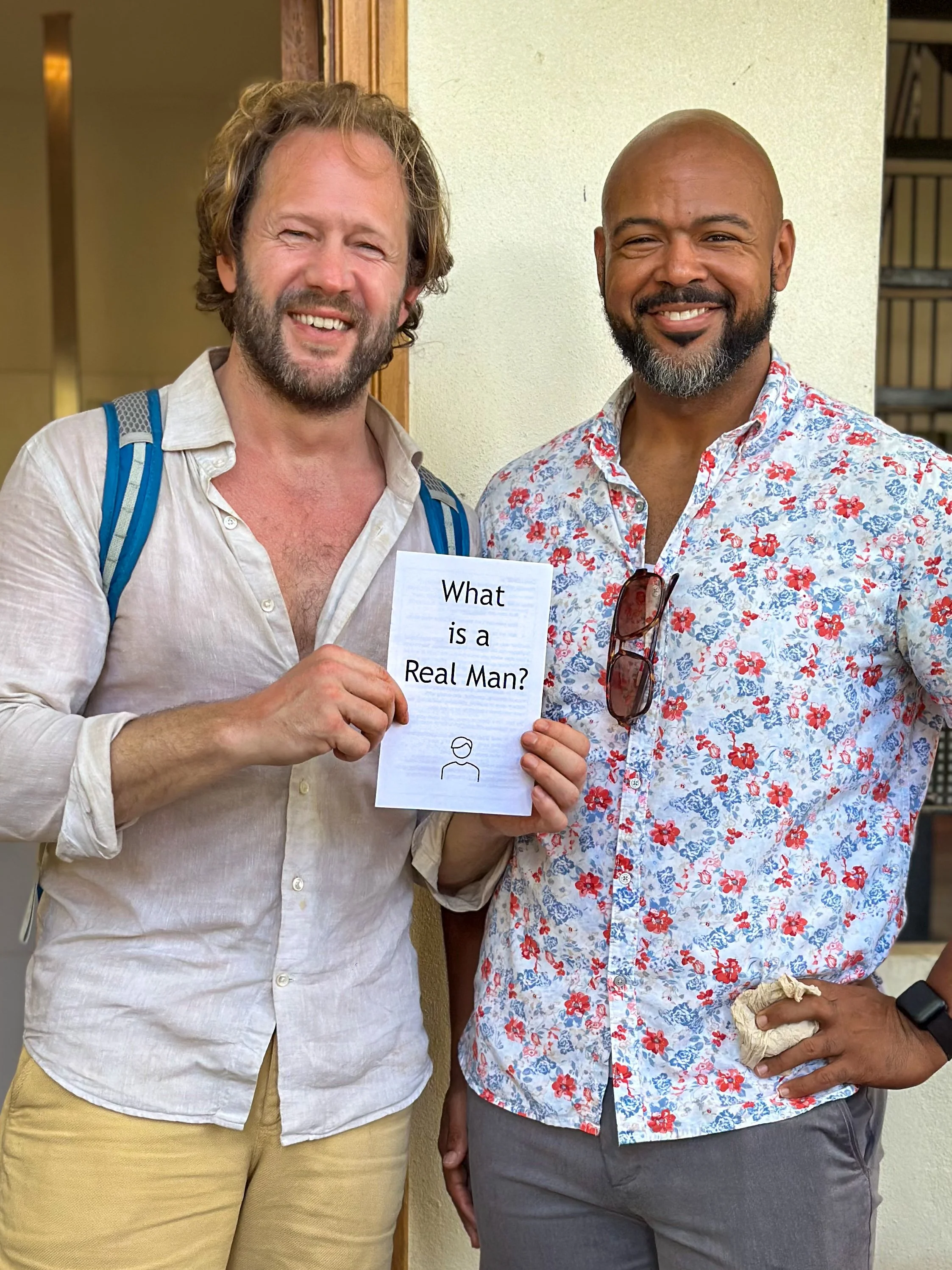
What is a real man? Community Market in Dominical, Puntarenas, Costa Rica.
Men Themed Leaflets: Best Sellers!
Kevin first surprised me by telling me that both men-specific leaflets had been “best sellers” across the country for the past few months. There is hope.
What surprised me even more was the story he shared about the roots of machismo in the region.
Foundations of Machismo
The foundations run deep, and they make this pattern very hard to break:
1. The legacy of the Spanish conquest
The Spanish conquest stripped indigenous men of their sovereignty, dignity, and resources. As a survival strategy, many local men internalized a brutal binary: you are either the conqueror — the Tyrant — or the conquered — the victim. There was little cultural space for the integrated, empathetic King.
2. The influence of colonial Catholicism
The colonial Catholic Church created marianismo — an ideal of womanhood modeled after the Virgin Mary. Women were expected to be pure, submissive, endlessly self-sacrificing, and spiritually superior. This left men to occupy the opposite polarity: the hyper-physical, aggressive “Beast” operating outside the home.
3. The burden of being the provider
A man’s identity was often reduced to one function: provider. We know that men often escape shame through grandiosity. When the economy becomes unstable and the provider role is threatened, some men turn to other ways of proving worth and gaining respect: physical dominance, sexual conquest, and stoicism. Over time, this dynamic also shaped politics and leadership culture.
4. The cycle of the father wound
The father wound remains deeply present, with historically high rates of absent or emotionally unavailable fathers. Without integrated men to initiate them into healthy masculinity, boys look to the culture to teach them how to be men. And too often, the culture hands them the machismo script.
Future is in our Hands
Listening to Kevin speak about how many conversations they are having around this theme — with both men and women — reminded me that this mission truly matters. There is a void. There is a lack of healthy role models. And there is a real hunger for a different way. The question is no longer whether this work is needed. It is. What matters now is how each of us chooses to respond.
